

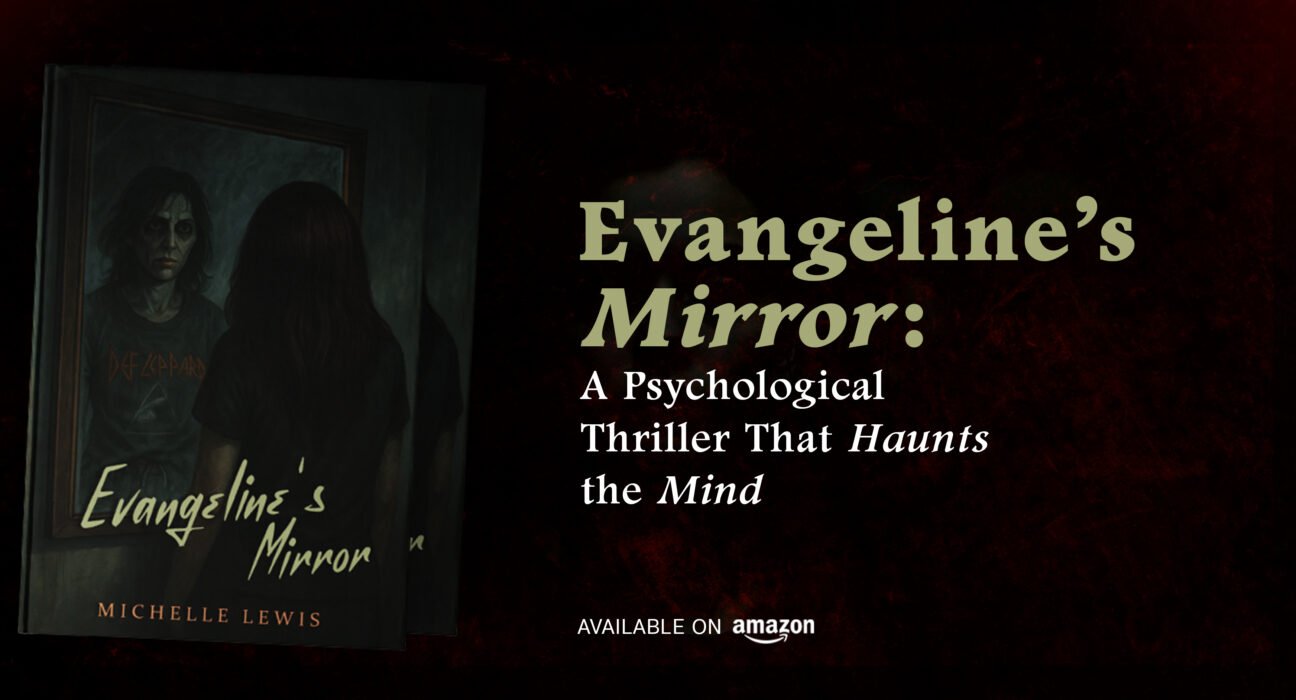
Few psychological thrillers manage to blur the line between reality and imagination as effectively as Evangeline’s Mirror by Michelle Lewis. From the opening pages, readers are drawn into the unsettling world of Evangeline, a woman whose reflection begins to act independently, whispering her name and forcing her to confront truths she has long suppressed. What starts as subtle unease quickly escalates into a gripping exploration of fear, identity, and the fragility of the human mind.
Evangeline’s journey starts in an ordinary home, a space that feels safe and familiar, yet the MirrorMirror transforms it into a stage for suspense and psychological tension. The reflection, seemingly alive, taunts and challenges her, creating a sense of dread that permeates every interaction. Lewis’s writing captures this tension with skill, allowing readers to experience Evangeline’s fear intimately. Every glance at the MirrorMirror becomes a moment of suspense, making the ordinary world feel strange and threatening.
The brilliance of Lewis’s storytelling lies in the novel’s psychological depth. Evangeline’s MirrorMirror is not merely about external threats but internal ones. The MirrorMirror acts as a symbol of Evangeline’s unacknowledged fears and unresolved trauma. As the reflection grows more assertive, she must confront memories, doubts, and insecurities that have been buried for years. This dual narrative — the external horror and the internal struggle — creates a multilayered reading experience that engages both the intellect and the emotions.
Suspense builds steadily throughout the novel. Lewis maintains a careful balance between what is revealed and what is left ambiguous, ensuring that readers remain uncertain whether Evangeline is descending into madness or being manipulated by supernatural forces. This ambiguity heightens the tension, forcing readers to question their own assumptions about perception and reality. Each chapter adds new layers of intrigue, pushing Evangeline further into uncertainty and keeping readers hooked until the final page.
Characterization in Evangeline’s Mirror is nuanced and compelling. Evangeline is relatable in her fears, desires, and reactions, making her journey all the more immersive. The supporting characters, though fewer in number, are carefully crafted to reflect the external pressures and relationships that influence Evangeline’s experience. These interactions highlight the human need for connection, validation, and understanding, even as the protagonist faces increasingly eerie and isolating events.
The MirrorMirror itself serves as both a plot device and a symbol. Traditionally, a tool for self-reflection, here it becomes a source of terror and revelation. Lewis cleverly uses this object to explore themes of identity, self-deception, and the consequences of ignoring inner truths. The Mirror’s whispers force Evangeline to confront uncomfortable realities, suggesting that sometimes the scariest discoveries are not external threats but reflections of one’s own mind.
The atmosphere is another strength of the novel. Lewis creates a pervasive sense of unease through her descriptions of ordinary spaces that gradually take on sinister qualities. Simple actions — passing a hallway, opening a door, or looking into a mirror — become charged with tension. This careful crafting of mood immerses readers in the psychological landscape, making every scene both gripping and unsettling.
Beyond the thrills, Evangeline’s Mirror explores deeper themes about the nature of fear, memory, and self-awareness. Evangeline’s confrontation with her reflection becomes a metaphor for facing hidden truths, acknowledging past mistakes, and accepting parts of oneself that have been ignored. This thematic richness elevates the novel beyond conventional horror or suspense, making it both a page-turner and a story with lasting emotional resonance.
Ultimately, Evangeline’s Mirror is a masterful psychological thriller that combines suspense, horror, and emotional depth. Michelle Lewis has crafted a novel that keeps readers on edge while offering profound insights into fear, identity, and the power of self-reflection. For anyone who enjoys character-driven suspense and stories that haunt long after the final page, Evangeline’s Mirror delivers a chilling and unforgettable reading experience.