
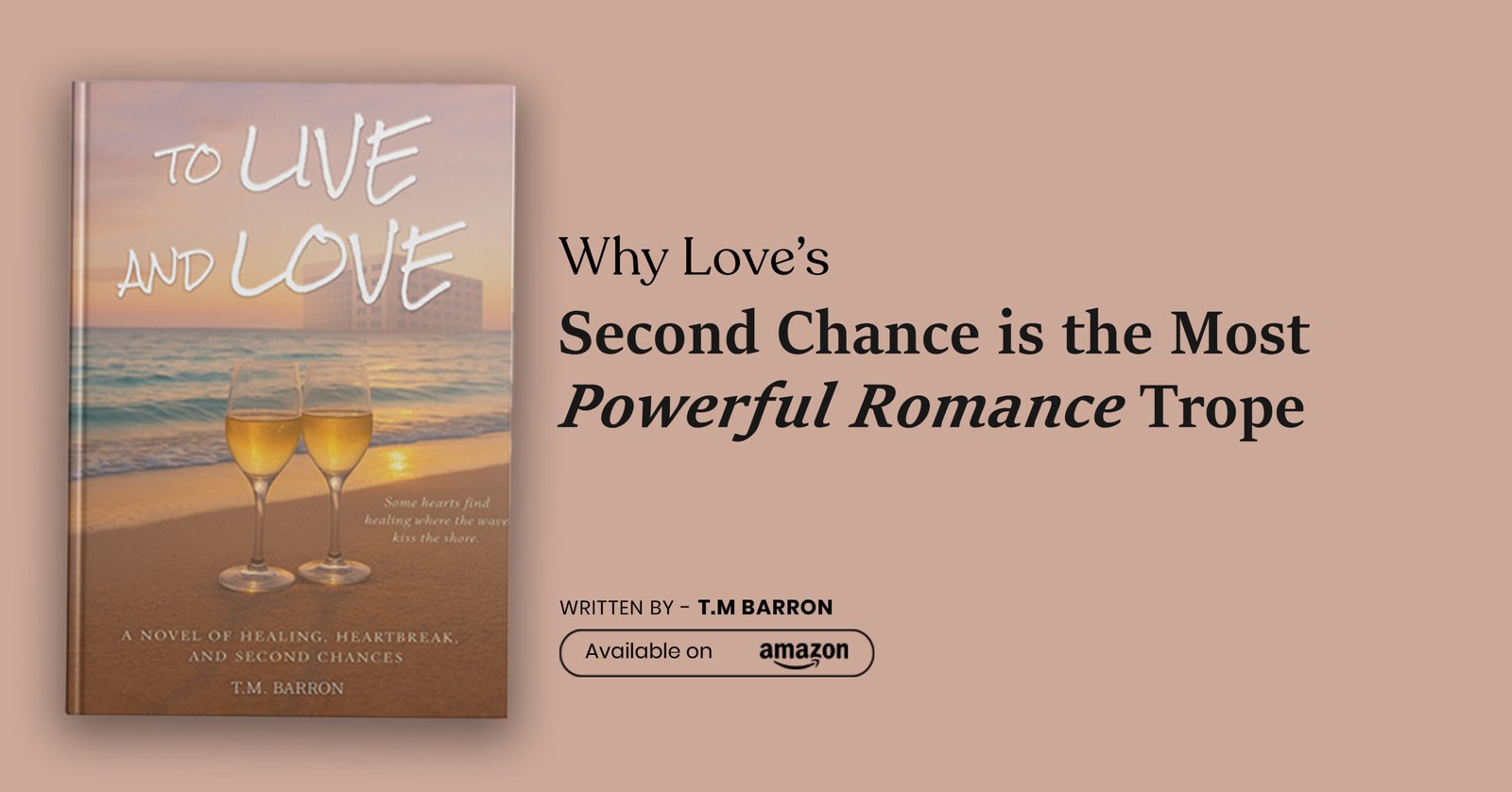
Love’s Second Chance is one of the most powerful tropes in the romance genre because it taps into some of the deepest desires and vulnerabilities that shape our relationships. The pain of regret and the possibility of redemption create a visceral tension that resonates with readers on a profound level. It is a genre that doesn’t just tell a story of reconnection, it examines the fragility of human emotion and the transformative power of forgiveness, both of self and others.
As an author, I have explored this trope extensively, finding its emotional depth to be the cornerstone of the stories I craft. T.M. Barron’s sanctuary for emotional storytelling is a place where I have created worlds filled with the beauty and complexity of love’s most raw moments, where characters come together not out of necessity, but because they have truly learned how to love again. In my works, I delve into rekindled love with the belief that second chances do not simply rewrite the past, but rather reshape the future through the fire of experience.
The Psychology of the “Second Chance”: Why We Can’t Let Go
Humans are naturally wired for narrative completion. From a psychological standpoint, our brains struggle with “The Zeigarnik Effect,” the tendency to remember uncompleted or interrupted tasks better than completed ones. In love, this manifests as the “one that got away.” We are haunted by the “what ifs” and the ghosts of the paths we didn’t take. This is why Love’s Second Chance is so addictive; it offers a mental and emotional resolution to the unresolved chapters of our own lives.
Regret is an emotion so universally felt that it often becomes a defining part of our emotional landscape. Whether it’s a relationship that ended too soon or a chance never seized, regret gnaws at the soul. From a psychological standpoint, second-chance romance novels act as a safe space where readers can confront these regrets without the real-world risk of further heartbreak. They watch characters face the agony of lost time and the struggle to rebuild what was once broken. The emotional payoff lies in the messy journey toward forgiveness, proving that time doesn’t just heal wounds; it provides the perspective necessary to appreciate the love we once threw away.
Mastering the Slow Burn Romance: Building Tension That Hurts
One of the most captivating elements of a second-chance story is the Slow Burn Romance. This isn’t just about delaying a kiss; it’s about the agonizing friction between “I still love you” and “I don’t trust you yet.” The slow burn is an art form that hinges on the delicate dance of attraction and distance. In a second-chance narrative, the characters aren’t strangers; they have a shared history of pain. This means every glance is charged with a decade of unspoken words.
Creating this tension requires “Emotional Layering.” You start with a layer of coldness, a defensive wall built to protect the heart. Then, you introduce small cracks: a shared memory, a familiar scent, or a gesture that only the other person understands. This simmering tension keeps readers on edge because it mimics the real-life fear of being vulnerable again. It’s about the fragility of human connection and the courage it takes to drop your guard. The slow burn isn’t just a plot device; it’s a psychological battle between the trauma of the past and the hope of the future.
Navigating Emotional Twists in Romance Novels
A key element that separates great stories from ordinary ones is the mastery of emotional twists in romance novels. These aren’t just external shocks; they are internal revelations. A second-chance story needs twists that force the characters to confront their own growth or lack thereof. It’s the moment when a protagonist realizes they were actually the reason the relationship failed ten years ago. That kind of twist is gut-wrenching because it requires radical self-honesty.
These twists keep the narrative from becoming predictable. In the second-chance trope, the biggest “twist” is often the realization that the person you’re reuniting with isn’t the person you left. They have changed, and so have you. Navigating these deep emotional love relationships means writing scenes where the conflict isn’t just “Why did you leave?” but “Who are we now?” This complexity is what drives engagement. Readers don’t want a smooth path; they want to see the characters struggle through the thorns of their own insecurities to reach the garden on the other side.
Live and Love: A Deep Dive into the Rekindled Love Novel
A rekindled love novel is a powerful subgenre because it acknowledges that time is both a healer and a divider. In my novel Live and Love, I aimed to show that a reunion is not a reset button. It’s a rebuilding process. The characters in Live and Love don’t just pick up where they left off; they have to unpack the emotional baggage of the years they spent apart. They have to mourn the people they used to be to love the people they’ve become.
What makes a rekindled love story so compelling is the weight of history. Every conversation is anchored by the past. In Live and Love, the protagonists face hurdles that feel real to anyone who has ever looked back with longing. It is a case study in resilience, showing that love isn’t just a feeling; it’s a choice you make every day, especially when the odds are stacked against you. By focusing on the “Raw Truth,” I ensure the romance feels earned, not gifted.
Crafting Deep Emotional Love Relationships that Feel Real
At its core, writing is about empathy. To craft deep emotional love relationships, an author must be willing to bleed onto the page. You have to understand the visceral ache of a ghost of a memory. Authentic romance isn’t about perfect people in perfect settings; it’s about flawed individuals who are brave enough to be messy together. It’s the “Information Gain” of seeing how a character processes grief, joy, and fear simultaneously.
In these narratives, the dialogue must be sharp and laden with subtext. The physical intimacy must be an extension of emotional trust. When I write, I focus on the “Internal Monologue” of what the character is thinking that they are too afraid to say. This depth is what creates E-E-A-T (Expertise, Experience, Authoritativeness, and Trustworthiness) for an author. Readers trust a writer who isn’t afraid to dive into the dark waters of human emotion. They want to see the vulnerability, the stuttered breaths, and the shaking hands of a character who is terrified of being hurt again but chooses love anyway.
Conclusion: Why Second Chances Are a Mirror to Our Own Resilience
Second-chance love stories are more than just romantic fiction; they are a reflection of our own resilience. As human beings, we all experience moments where we feel like love is lost or broken. We wonder if we can ever heal. The beauty of the second-chance trope is that it reminds us that redemption is a real-world possibility. It tells us that our mistakes do not define us; our ability to learn from them does.
In the end, stories like Live and Love offer a roadmap for the heart. They remind us that no matter how far we’ve fallen, there is always the potential for rising again. These stories provide a mirror to our own lives, reflecting the strength we all have to overcome heartache. For those looking for a space where your own journey is understood, I invite you to join the community where vulnerability meets strength on Facebook. There, we explore these themes of recovery and hope together.
Through the lens of Love’s Second Chance, we find the most powerful reminder of all: that love, in its truest form, is never really gone; it’s just waiting for the right moment to find its way back home.




Leave feedback about this