


When the Past Speaks to the Present
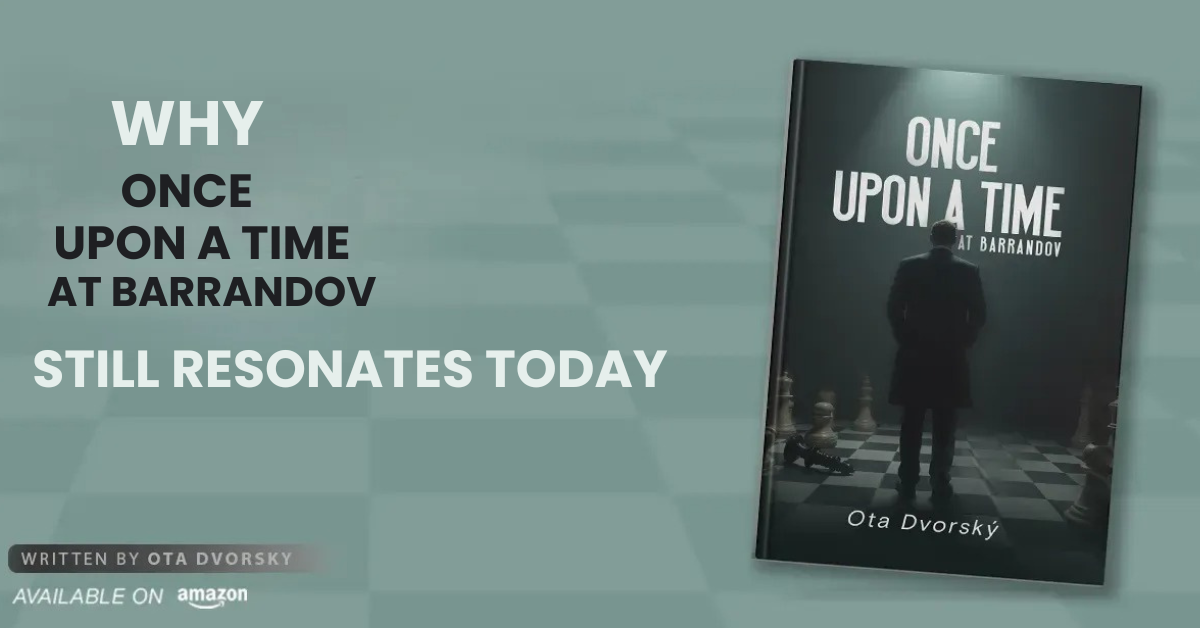
Historical fiction succeeds when it does more than reconstruct a moment in time; when it uses the past to illuminate the present. Once Upon a Time at Barrandov achieves this with striking clarity. Though set during the political upheaval of Prague in 1968, the novel speaks directly to modern concerns about censorship, surveillance, and the fragile nature of creative freedom.
By focusing on artists rather than politicians, Ota Dvorský invites readers to view history through a human lens. The novel reminds us that political decisions do not exist in abstraction; they shape daily lives, ambitions, and the ability to imagine freely. This perspective gives the story a resonance that extends far beyond its historical setting.
A Moment When Hope Met Repression
The events of 1968 represent a turning point in Czech history. The Prague Spring offered a brief glimpse of openness, reform, and possibility before being crushed by Soviet occupation. In Once Upon a Time at Barrandov, this collision between hope and repression becomes the emotional core of the narrative.
Dvorský portrays a world where optimism feels real, if fragile, where artists believe change may finally allow their work to speak honestly. When that hope is abruptly withdrawn, the impact is devastating. Dreams do not simply vanish; they are forced into hiding. This experience mirrors the way creative expression continues to be restricted in various forms around the world today, making the novel feel unsettlingly current.
The Role of Art in Times of Oppression
At its heart, the novel asks a timeless and essential question: What is the role of art when freedom is limited? Dvorský offers no easy answers. Art, he suggests, does not overthrow regimes or instantly dismantle systems of control. Instead, it performs a quieter but more enduring function; it preserves humanity.
Through scripts, stories, and images, artists maintain a sense of identity when ideology demands conformity. In Once Upon a Time at Barrandov, creativity becomes a way of holding onto truth, dignity, and meaning when reality insists on silence. This portrayal challenges the notion of art as mere entertainment, framing it instead as a vital human necessity.
Creating Under Constraint: A Universal Experience
While deeply rooted in Czech history, the novel speaks to a universal experience shared by creators across cultures and eras. Artists everywhere have faced pressure, whether political, social, or economic, to conform, self-censor, or abandon their voice.
Dvorský’s characters reflect this reality. They struggle with fear, doubt, and moral compromise, yet continue to create because imagining another world remains essential to survival. Their experiences resonate with contemporary readers navigating environments where expression is increasingly monitored or manipulated.
Reclaiming Forgotten Forms of Resistance
Another reason the novel resonates is its challenge to how history is remembered. Political movements dominate historical narratives, while cultural resistance often fades into footnotes. Once Upon a Time at Barrandov restores balance by honoring those whose courage existed not in speeches or protests, but in scripts, scenes, and stories.
By centring cultural creators, Dvorský reminds readers that resistance takes many forms—and that preserving imagination is itself an act of defiance.
Why This Story Still Matters
Emotionally rich and historically grounded, Once Upon a Time at Barrandov invites reflection on our own responsibilities as readers, creators, and citizens. Silence, the novel suggests, is rarely neutral; what we choose to protect or ignore shapes the future.
By shining a light on untold stories of courage and creativity, the book affirms that even in the darkest times, imagination endures. And it is this endurance, quiet, persistent, and deeply human, that continues to shape the world long after regimes fade.