

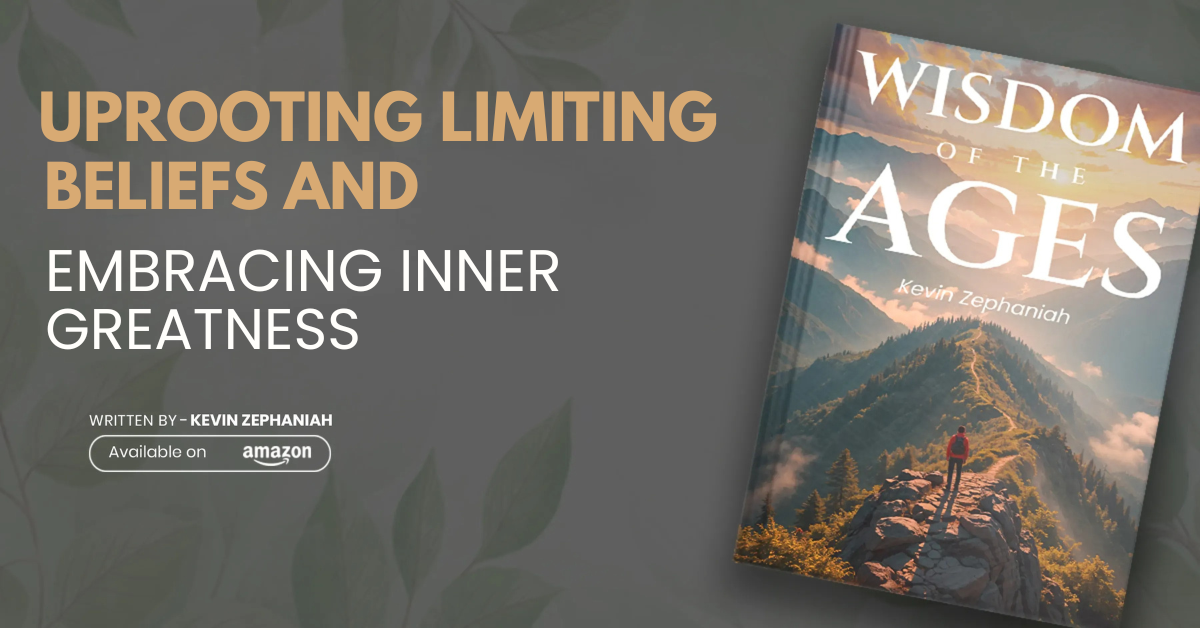
Many people move through life guided by unseen boundaries, beliefs formed by fear, conditioning, or experience that quietly dictate what feels possible. In Wisdom of the Ages: Discovering the Path Within, Kevin Zephaniah gently yet powerfully invites readers to examine these inner constraints and begin the process of uprooting them. The book is not about radical reinvention, but about remembrance; rediscovering the innate greatness that already exists beneath layers of doubt and distraction.
Zephaniah approaches limiting beliefs with compassion rather than confrontation. He recognizes that these beliefs often arise as coping mechanisms, developed to protect rather than restrict. Over time, however, they harden into narratives that shape identity and behavior. The book encourages readers to pause and ask meaningful questions: Why do I believe this? Where did this story begin? Does it still serve me? In asking, awareness replaces unconscious acceptance.
A central theme throughout the book is fear; not as an enemy to be defeated, but as a signal to be understood. Zephaniah illustrates how fear often disguises itself as logic or responsibility. What appears to be realism is self-protection rooted in past disappointment. By illuminating this dynamic, the book empowers readers to distinguish between genuine wisdom and fear-based limitation.
Trust plays a vital role in this process. Wisdom of the Ages emphasizes trust not only in a divine purpose, but also in the reader’s own inner guidance. Zephaniah reminds us that clarity rarely arrives through force or urgency; it unfolds through alignment. When choices reflect inner truth rather than external pressure, life begins to feel more coherent and intentional.
Another transformative concept explored in the book is abundance. Zephaniah reframes abundance as a state of awareness rather than accumulation. By shifting perspective from scarcity to sufficiency, readers are encouraged to recognize what is already present—strength, resilience, creativity, and worth. This reframing dissolves the belief that fulfilment is always somewhere in the future, dependent on achievement or approval.
Transparency emerges as a cornerstone of personal growth. Zephaniah argues that authenticity is not vulnerability for its own sake, but a disciplined honesty with oneself. Living transparently allows individuals to align values with actions, reducing inner conflict and restoring clarity. When life is no longer fragmented between who we are and who we pretend to be, energy once spent on self-protection becomes available for growth.
What makes Wisdom of the Ages particularly resonant is its balance between spiritual depth and practical application. Reflection prompts woven throughout the book invite readers to apply insight to daily life—how they manage time, relate to others, and respond to challenges. These moments of reflection transform wisdom from concept into practice.
The book does not promise ease. Uprooting limiting beliefs requires patience, courage, and self-compassion. Zephaniah acknowledges fatigue, doubt, and moments of resistance, presenting growth as an ongoing process rather than a destination. This honesty makes the journey feel attainable rather than idealized.
Eventually, Wisdom of the Ages is a call to quiet courage, the courage to listen inwardly, to trust what arises, and to live from a place of authenticity. Zephaniah reminds readers that inner greatness is not earned; it is remembered. By releasing limiting beliefs and embracing more profound truth, readers are invited to step fully into lives shaped not by fear, but by clarity, purpose, and wholeness.