

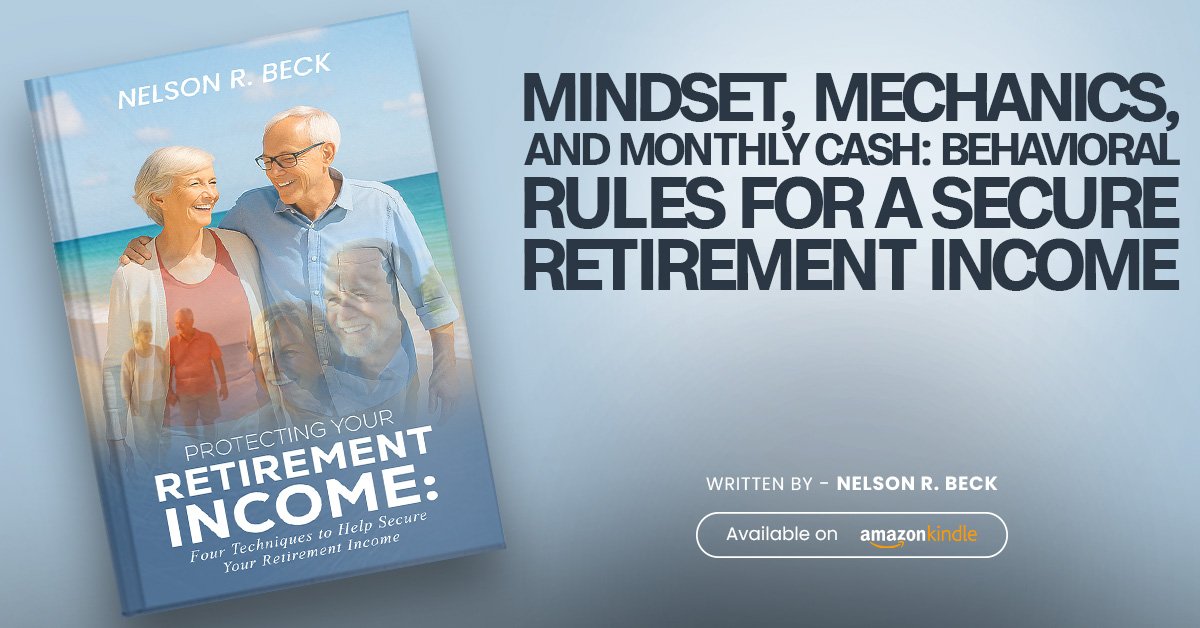
Managing retirement income is equal parts technical math and human behavior. Nelson R. Beck’s short manual offers both tools and habits: the technical techniques (4% rule, dividend growth, bonds, annuities) and the everyday practices — saving in retirement, automated transfers, thrift — that make a plan resilient. This article translates his guidance into a behavioral checklist retirees can apply immediately.
Retirement Is a Process, Not a Moment
First, accept that retirement is a multi-year project, not a single transaction. Beck shows through historical examples that markets cycle; withdrawals timed to downturns hurt outcomes. The behavioral remedy is planning for uncertainty: separate short-term income from long-term growth and automate the process.
For example, set an annual withdrawal (e.g., 4%) and move that cash to a safe account at the start of the year. That prevents panic selling and smooths monthly spending.
Automate Thrift and Emergency Savings
Second, automate thrift and emergency savings even during retirement. Beck recommends treating savings as the first outlay each month — transfer to a cash or liquid account before paying bills. This inverted rule reduces lifestyle creep, builds a cushion for unexpected expenses (car repairs, medical bills), and ensures you don’t raid investment holdings during market dips. Over time, automated savings compound into meaningful reserves.
Diversify Income Streams and Keep It Simple
Third, cultivate income diversity and simple governance. Pick two or three income streams that match your comfort with risk: a dividend ETF for growing cash flow; a bond ladder or bond ETF for stability; a partial immediate annuity for lifetime protection.
Document the plan in writing — allocation targets, rebalancing rules, who to call in an emergency, and which advisor or family member has necessary paperwork. Clear rules reduce emotional decisions during market stress.
Understand the Tradeoffs of Each Strategy
Fourth, know the tradeoffs. Annuities buy lifetime certainty but reduce liquidity; dividend portfolios offer increasing payouts but entail company and market risk; the 4% rule offers flexibility but can produce lower payouts in bad markets.
Beck’s practical suggestion: roll over workplace plans into an IRA for control and then segment the IRA across the techniques you choose. That simple procedural move gives retirees options and consolidates recordkeeping.
Spend Conservatively and Prioritize Essentials
Fifth, use conservative heuristics for spending. Beck’s examples show how a retiree’s tolerances matter: could you withstand an $8,000 cut in the first years? If not, start with a lower withdrawal rate, preserve more cash, or increase guaranteed income via annuity.
A rule of thumb: prioritize core needs with guaranteed or highly reliable cash, and fund discretionary spending with growth assets. This prioritization keeps essentials safe and lets discretionary spending absorb more volatility.
Keep Learning and Choose Low-Cost Tools
Sixth, keep learning and use simple, low-cost tools. Beck lists reading and resources (index fund books, dividend research sites, annuity quote portals). For many retirees, low-cost ETFs and simple index-based strategies outperform complex active bets.
Use fund fact sheets, check expense ratios, and prefer broadly diversified funds to minimize single-company surprises.
Build Non-Financial Resilience
Finally, plan for non-financial resilience: health, relationships, and purpose. Financial security is easier with good health and social support; thrift and intentional living often increase life satisfaction beyond dollars.
Beck’s humane closing point is that retirement planning is about living well — preserving choice and dignity — and that careful income design supports the life you want.
A Mindful Balance Between Habits and Techniques
Combine these behavioral rules with the technical methods (withdrawal rules, dividend growth, bonds, annuities) and you get a retirement plan that’s robust in markets and sustainable in life. Beck’s short, direct guide is a practical prompt to act deliberately, save consistently, and build an income plan that fits both your needs and your temperament.